
Why Kumaon Celebrates Diwali 15 Days Early (and How to Celebrate It at Evara)
Most of India counts down to Diwali from Dhanteras. In the hills of Kumaon, the lamps are already lit two weeks before that.
Ask anyone who grew up in a village near Nainital or Almora and they will tell you: Diwali here is not a five-day festival. It is closer to a month-long season of light. It starts on the full-moon night of Kojagari Purnima, peaks on the main Lakshmi Puja night, and quietly signs off on Budhi Diwali, about eleven days later.
This year, Diwali falls on Sunday, 8 November 2026. If you are looking for a Diwali celebration that feels more rooted than a city party, Kumaon is worth the drive. And EVARA Spa & Resort sits right in it, in Patkote, Ramnagar, in the Nainital district, a short ride from the Jim Corbett gate.
Here is what makes a Kumaoni Diwali so different, and how you can spend this festive season with us.
Why does Diwali begin 15 days early in Kumaon?
In Kumaon, the festival of lights does not wait for Amavasya. It begins on Kojagari Purnima, better known as Sharad Purnima, the full moon that falls roughly 15 days before Diwali.
Local elders explain it through the life of Goddess Mahalakshmi. The season marks her three stages, each with its own Diwali:
- Nani Diwali (little Diwali), on Kojagari Purnima, honours Lakshmi as a child.
- Thuli Diwali (big Diwali), the main Lakshmi Puja night, honours her in her youth.
- Budhi Diwali (old Diwali), on Haribodhini Ekadashi, honours her in old age. Locals also call it Taktaku Ekadashi.
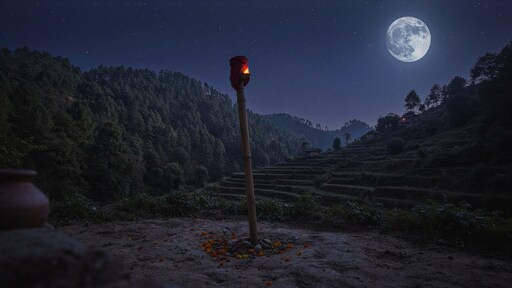
From that first full moon until Budhi Diwali, many families light an akash diya, a sky lamp, in the courtyard every evening. It is wrapped in red cloth so the mountain wind cannot blow it out. In some homes a small electric bulb has taken its place, but the idea is the same: keep a light burning for the whole season.
The old Kumaoni name for the festival is not even Diwali. It was Bagwai or Bagwal. The word comes from the stone-throwing contests hill warriors once practised around this time. "Diwali" became common later, as people from the plains settled in the hills.
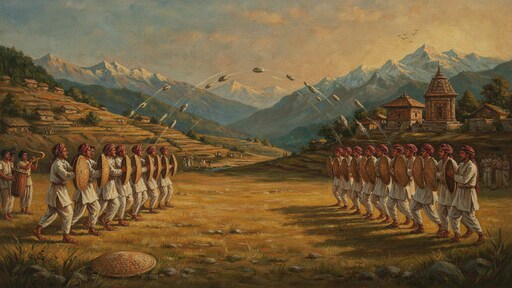
So when you hear that Kumaon celebrates Diwali 15 days early, it is not a calendar mix-up. It is a much older, slower way of welcoming the goddess home.
Kumaoni Diwali traditions you won't see anywhere else
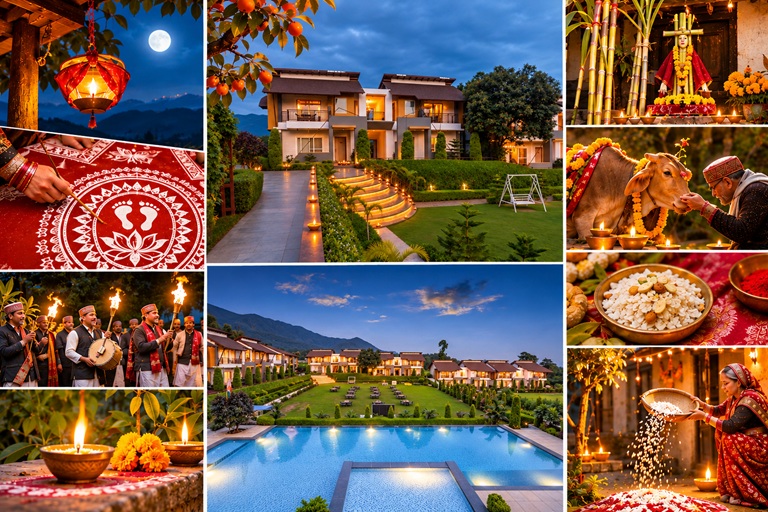
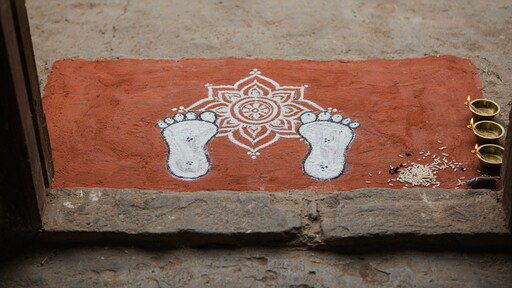
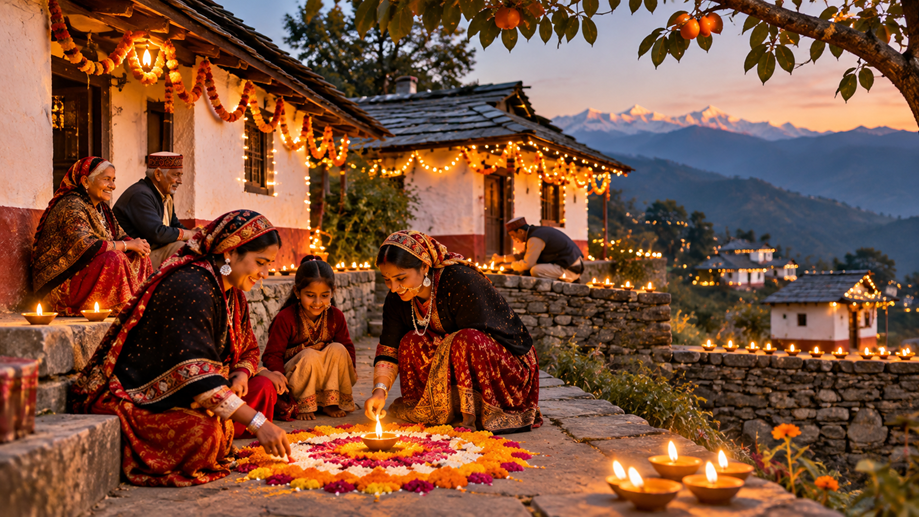
Aipan instead of rangoli. Weeks before the festival, women in Kumaoni homes "put" Aipan, the region's folk art. A base of red earth (geru) is laid first, then fine white patterns are drawn over it with rice paste. For Diwali, they draw the Lakshmi Chowki and a trail of the goddess's footprints, called Lakshmi-pau, leading from the doorstep into the house. In villages, neighbours often help each other finish their Aipan, a custom known as bet.
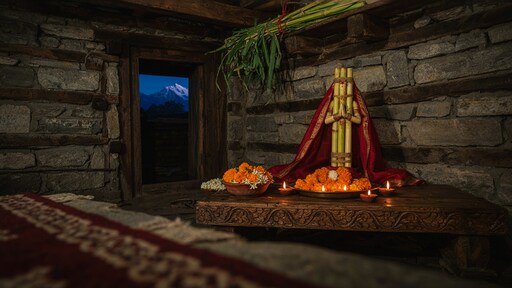
A goddess made of sugarcane. In many Kumaoni villages, Mahalakshmi is worshipped in the form of sugarcane. In towns, families shape a Lakshmi figure out of sugarcane and dress her with a veil. Sugarcane stalks are also hung from the eaves, so the gods have a ladder to climb into the home.
Lamps in every corner. Before oil-lamp strings became common, hill homes were lit with chhiluk, resin-rich pine sticks that burn bright and fast. Lamps were placed in the kitchen, the courtyard, the water spring, the cowshed and beside the tulsi plant, not just at the front door.
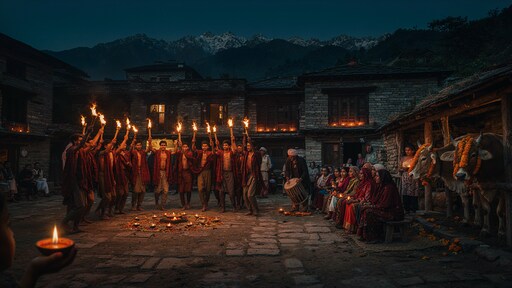
Cattle come first. In a farming region, wealth meant cows and bullocks. That is why Govardhan day in Kumaon starts with worshipping the cattle. At night, young men from the village carry flaming torches from house to house, dancing to the beat of the hurka drum.
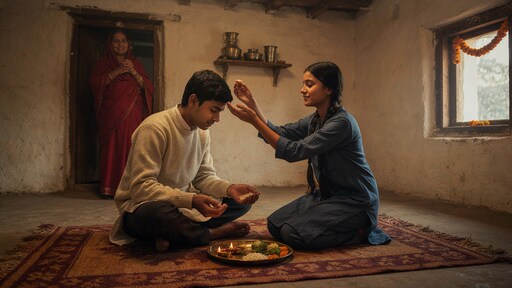
Chyuda on Bhai Dooj. On the day of Bhai Dooj, called Duttiya or Bagwali ka tyar here, sisters place chyuda (flattened rice from the new harvest) on their brothers' heads.
Budhi Diwali sends poverty packing. On Budhi Diwali, women wake around 4 am. They fill a winnowing basket (soop) with puffed rice, sweets, walnuts and pomegranate, and beat it with a piece of sugarcane while walking through every corner of the house. As they go, they sing a folk line inviting Lakshmi and Narayan to sit and stay, while telling bhuiyan, the spirit of poverty, to get out.
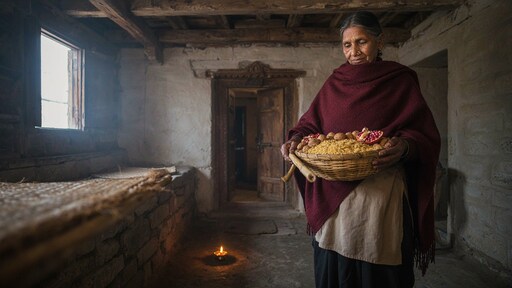
It is a gentle, joyful kind of Diwali, much more about home and harvest than noise and fireworks.
Celebrate Diwali in Jim Corbett at EVARA Spa & Resort
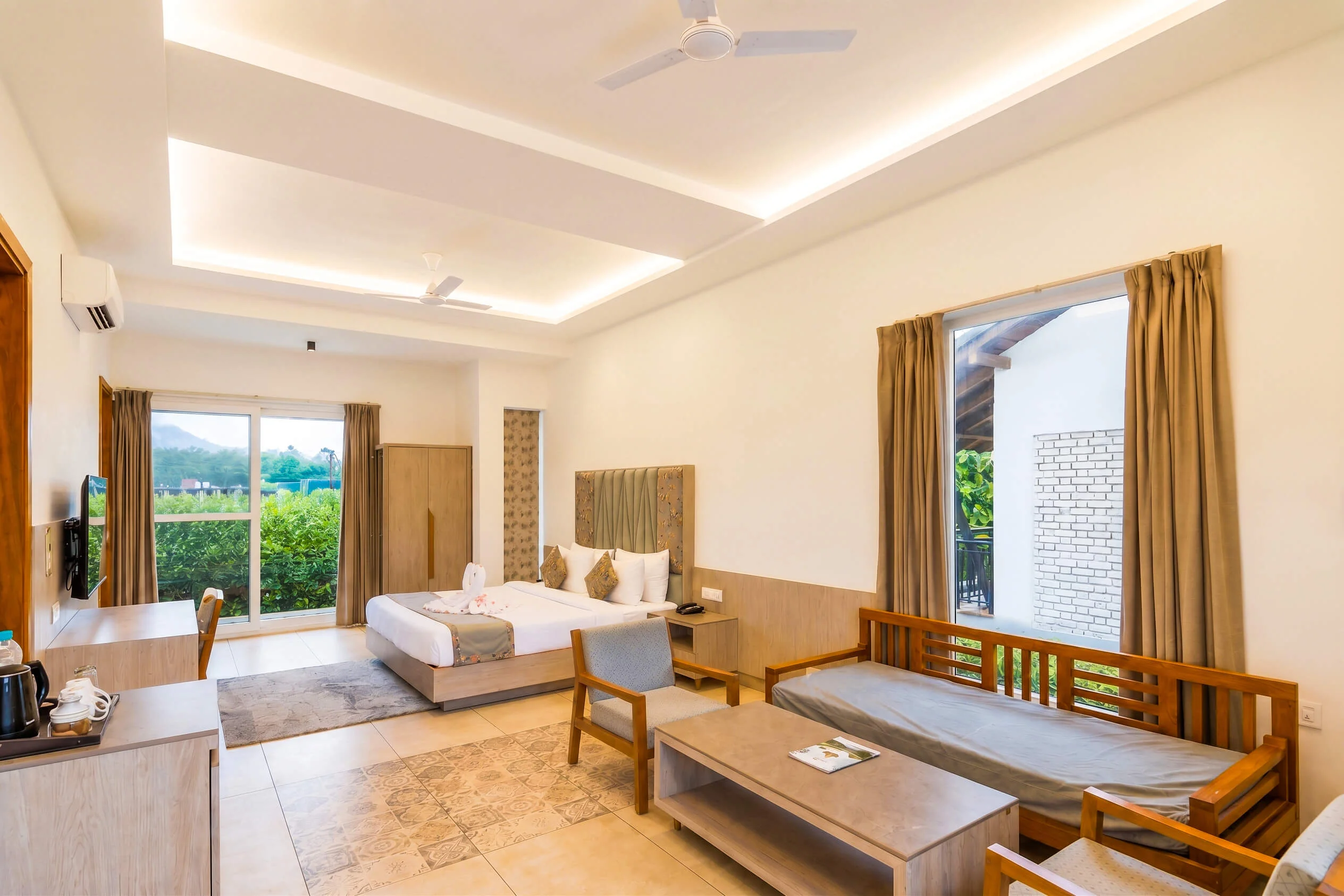
You don't have to grow up in the hills to feel this kind of Diwali. EVARA Spa & Resort is a boutique retreat on six acres of sal forest in Patkote, inside the Kumaon belt of Nainital district. It is the kind of place where the evening quiet makes every diya look brighter.
If you are searching for a Diwali package in Jim Corbett or a Diwali package near Delhi, here is what a festive stay with us can look like:
- A stay that suits your group. Choose from 80 rooms, cottages and villas: Deluxe Rooms, Super Deluxe and Duplex Cottages, a Premium Cottage with its own jacuzzi, or a Private Pool Villa for up to twelve people.
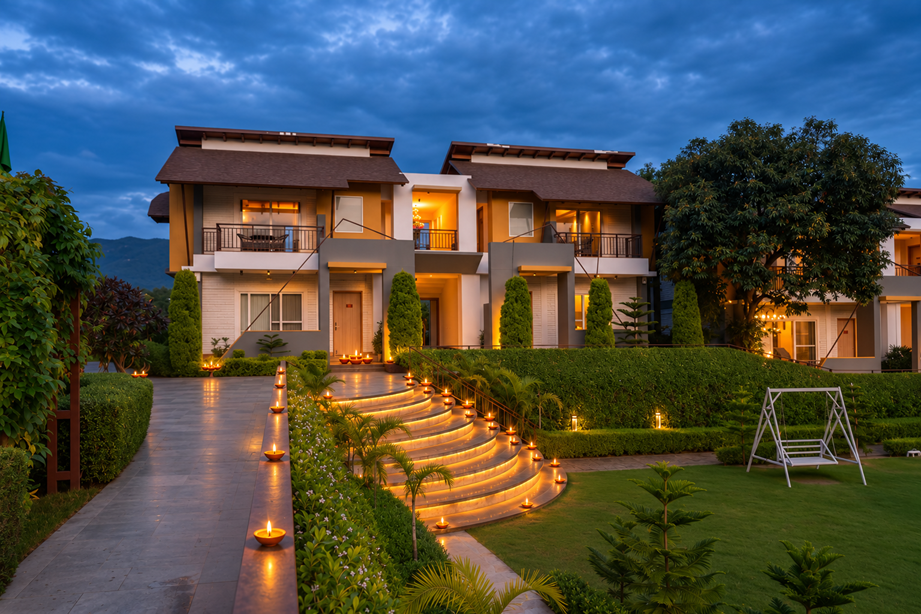
- Diwali lights in the forest. Lawns, pathways and cottages glowing against a dark jungle sky is a very different picture from a city balcony.
- Festive food without the cooking. Our restaurant seats 110, so the family can sit down together without anyone stuck in the kitchen.
- A spa day after the rush. The Evara Spa offers Ayurveda treatments from 9 am to 6 pm, ideal after weeks of Diwali cleaning and shopping.
- A safari morning. The Corbett gate is about 4 km away. Our Corbett Safari Package (October to June) includes a jeep safari with permits handled.
- Room for the whole family. The Family Long Weekend gives you a Duplex Cottage for three nights, with the children's day already planned.
Every package is available only when you book direct, with breakfast, the best available rate and free cancellation up to 72 hours as standard. See the latest Diwali offers and packages at EVARA before festive dates fill up.
Planning a Diwali getaway in Uttarakhand: a few honest tips
- Book early. Diwali weekend is one of the busiest times in Corbett and Nainital. Peak dates may carry a minimum stay.
- Think beyond one night. The Kumaoni season runs from Kojagari Purnima to Budhi Diwali. In 2026, Budhi Diwali falls in the third week of November, so you can still catch it after the main festival.
- Pack for cool evenings. November nights in the Kumaon foothills get chilly. A light jacket or shawl is a must.
- Try something local. Pick up a hand-painted Aipan piece or a sugarcane stalk from a local market. Ask an elder about the old customs; most are happy to share.
- Go easy on crackers. You are next to a national park. A diya-lit Diwali is kinder to the wildlife and, honestly, more beautiful in the forest.
Frequently asked questions
When is Diwali in 2026? Diwali 2026 is on Sunday, 8 November, with Lakshmi Puja in the evening.
Why is Diwali celebrated 15 days earlier in Kumaon? In Kumaon, the festival starts on Kojagari (Sharad) Purnima, about 15 days before Diwali. It is celebrated as Nani Diwali, the first of three Diwalis honouring the stages of Goddess Lakshmi's life.
What is Budhi Diwali in Kumaon? Budhi Diwali falls on Haribodhini (Devuthani) Ekadashi, about 11 days after the main Diwali. Families perform a dawn ritual to drive poverty out of the house.
What is Aipan art? Aipan is Kumaon's traditional folk art, drawn with rice paste over a red earth base. At Diwali, families draw the Lakshmi Chowki and Lakshmi's footprints at the doorstep.
Is there a Diwali package in Jim Corbett near Delhi? Yes. EVARA Spa & Resort in Patkote, Ramnagar, offers stay packages through the festive season. Check current Diwali packages at EVARA for dates and inclusions.
Can I combine a Diwali stay with a Corbett safari? Yes. The Corbett gate is about 4 km from the resort, and the Corbett Safari Package runs from October to June.
Bring the light home this Diwali
Kumaon taught us that Diwali doesn't have to be rushed into one loud night. It can be a slow season: a sky lamp in the courtyard, Lakshmi's footprints at the door, and family around one table.
This year, spend it where those traditions still live. Light a diya under the sal trees, unwind at the spa, and wake up to the forest. Explore our Diwali celebration packages in Jim Corbett, or call us on +91 96 5033 5848 to plan your stay.
Shubh Deepawali from all of us at EVARA Spa & Resort.
By EVARA Spa & Resort · Published 01 Nov 2026